Patient Guide to Medical Cannabis
WELCOME TO THE SUPERIOR DISPENSARY!
The Superior Dispensary provides a safe and welcoming environment in which you can learn about how medical marijuana can benefit you. Our cannabis consultants are well trained and are very passionate about sharing their knowledge with you. We encourage you to ask question and provide feedback, so that we can provide the best customer service for you. Our number one goal is to provide you with the highest level of customer service and patient education.

IMPORTANT PATIENT INFORMATION:
• KEEP CANNABIS PRODUCTS OUT OF REACH OF CHILDREN.
• Do NOT consume alcohol with Medical Marijuana.
• Do NOT consume Medical Marijuana while pregnant or breast feeding.
• Do NOT drive or operate heavy machinery under the influence of medical marijuana.
• Do NOT undertake a position of responsibility such as childcare or entering a workplace while under the influence of medical marijuana.
• Arizona law prohibits the consumption of marijuana in any form on the property of a nonprofit medical marijuana dispensary.
BECOMING A MEDICAL MARIJUANA PATIENT:
In November 2010, voters passed the Arizona Medical Marijuana Act. The citizen initiative (Proposition 203) called on the Arizona Department of Health Services to create a medical marijuana program to help patients that desired alternatives from traditional pharmaceutical medications and their potential side effects.
The Arizona Department of Health (AZDHS) maintains the Medical Marijuana Program; therefore, all applications are completed through their website. AZDHS will only accept applications submitted online.
Visit www.azdhs.gov/medicalmarijuana/patients for up-to-date instructions and online forms.
CBN’s (Cannabinol)
There is very little CBN present in fresh marijuana plants. The more CBN the less THC, medical cannabis containing high levels can also indicate its age and improper handling of medicine. High CBN levels also have shown undesirable symptoms like confusion, lightheadedness, and acts as a weak agonist of the cannabinoid receptors. CBN has a mildly psychoactive characteristic associated to it.
STUDIES HAVE SHOWN CBN’S MEDICINAL VALUES:
• Acts as a sleep aid
• Slows inflammation
• Helps with controlling pain
• Suppresses muscle spasms and convulsions
• Helps fight free radicals in the blood stream
CBC’s (Cannabichromene)
Very little is known about CBC however research has shown to have valuable medicinal properties. CBC has no psychoactive characteristics associated to it.
STUDIES HAVE SHOWN CBC’S MEDICINAL VALUES:
• Helps with controlling pain
• Stops growth of Fungi
• Slows inflammation
• Stimulates bone growth
• Encourages cell growth
• Stops growth of bacteria
• Assists in contraction of blood cells
THCA (Tetrahydrocannabinolic Acid)
THCA is a precursor of THC. THCA is typically the main constituent found in fresh cannabis and will decarboxylate to its active form while drying or when heated. THCA does not have psychoactive effects but can be used as an anti-inflammatory or neuroprotective medication.
STUDIES HAVE SHOWN THCA’S MEDICINAL VALUES:
• Slows inflammation
• Help control cancer cell growth
• Suppresses muscle spasms and convulsions
THCV (Tetrahydrocannabivarin)
THCV is an analogue to THC and shares characteristics that help to increase additional benefits of THC in smaller doses. Recently studies have shown THCV in larger doses reduce the medicinal effects of THC. THCV have medium psychoactive characteristics associated to it.
STUDIES HAVE SHOWN THCV MEDICINAL VALUES:
• Effective in appetite suppressant
• Helps control obesity
• Type II diabetes human testing currently underway
CBG’s (Cannabigerol)
CBG are not found too often in medicinal cannabis but more commonly found in higher concentrations of hemp. CBG have no psychoactive characteristics associated to it.
HAVE SHOWN THCU MEDICINAL VALUES:
• Stops growth of bacteria
• Stimulates bone growth
• Encourages cell growth
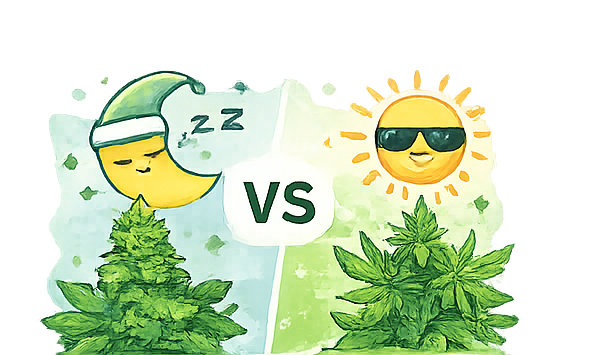
UNDERSTANDING THE DIFFERENCE BETWEEN INDICA AND SATIVA CANNABIS:
SATIVA (DAY CHOICE)
Cannabis Sativa is a tall, slow to grow and mature plant that typically has long, thin leaves that may vary in color from light green to dark green. Sativa flower buds are long and thin and tend to stay mature in a warm environment. In cooler environments, the buds may be slightly purple. Sativa plants smell sweet and fruity and the smoke is generally quite mild. The stalks of Cannabis Sativa plants are a source of fiber for rope and other products. The Cannabis Sativa medicating effect is often characterized as uplifting and energetic, and is mostly cerebral. Sativa users typically experience a feeling of euphoria and wellbeing, as well as a good measure of pain relief for certain symptoms. A few pure sativas are also very high in THG content and are known to have a hallucinogenic effect. Sativas and sativa-dominant hybrids are often a good choice for daytime medications, conditions and symptoms that have physically provided the most relief for: Psychoactive Conditions, Social Anxiety, Mild Depression, Fatigue and more.
INDICA (NIGHT CHOICE)
Cannabis Indica (Figure 3) is a short to moderate height, generally between three and six feet, bushy plant and its leaves are shorter and broader than the Sativa leaves. The leaves are generally dark green, and are sometimes tinged with purple. As they near maturity, the leaves may become more purple in color. Indica is a strong-smelling plant with a “stinky” or “skunky” smell. The smoke of Indica is generally thick and more prone to cause coughing when inhaled. Indicas are traditionally sourced from colder climates. The Cannabis Indica medicating effect is most often described as a pleasant body buzz. Indicas are great for relaxation, stress relief, and for an overall sense of calm and serenity. Cannabis indicas are also very effective for overall body pain relief, and often used in the treatment of insomnia. They are the type ending choice of many patients as an all-night sleep aid. A few pure Indica strains are very potent in THC and will cause the “couchlock” effect, enabling the patient to simply sit still and enjoy the experience of the medicine. Conditions that indicas typically provides the most relief for are: Pain Relief, Sedation, Anxiety, Neuropathy/Neuralgia, Menstrual Cramps, PMS, Glaucoma, Muscle Cramps, Muscle Spasms, Asthma, AIDS, Epilepsy, IBS, Gastric Disorders, Arthritis (Osteo & Rheumatoid), Multiple Sclerosis, Cerebral Palsy, Crohn’s Disease, Fibromyalgia, ALS, Migraines, Hyperactivity, Insomnia, ADD and more.
HYBRIDS
In addition to pure Cannabis Sativa and Indica plants, thousands of different types of hybrid plants are in existence. Hybrids typically fall into two different groups: Indica-Sativa (I/S) or Sativa-Indica (S/I), the first strain of the title generally being the dominant of the two. The goal of hybrid strains is to combine characteristics of each strain to minimize some of the unwanted effects of one while adding the desired effects of the other. For instance, Indica-dominant hybrids are effective for pain relief with the Sativa component allowing the patient to maintain energy and activity levels. Sativa-dominant strains are good for stimulating appetite, with the Indica component helping to reduce body pain and increase relaxation.
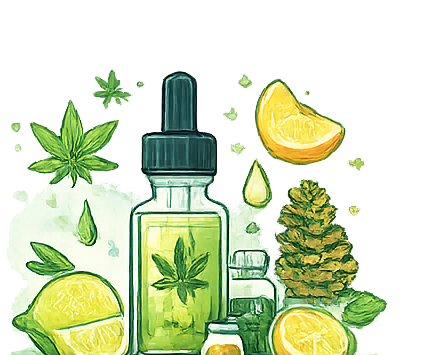
UNDERSTANDING HOW TERPENES (Terpenoids) AFFECT THE BODY?
a-HUMULENE (Hoppy Aroma)
• Anti-Tumor
• Anti-Bacterial
• Anti-Inflammatory
• Suppresses Appetite
a-PINENE (Pine Aroma)
• Sleep Aid
• Anti-Anxiety
• Sedative
• Bronchodilator
• Anticonvulsant
• Stress Reliever
• Anti-Epileptic
• Anti-Convulsant
• Anti-Inflammatory
B-CARYOPHYLLENE (Rich Spicy Aroma)
• Anti-Tumor
• Anti-Fungal
• Anti-Inflammatory
• Anti-Bacterial
• Anti-Septic
• Muscle Relaxant
CARYOPHYLLENE OXIDE (Spicy Aroma)
• Anti-Fungal
• Anti-Ischemic
• Anti-Inflammatory
• Pain Reliever
LIMONENE (Citrus Aroma)
• Anti-Anxiety
• Anti-Depression
• Anti-Tumor
• Antiseptic
• Anti-Stress
• Antimicrobial
• Immunostimulant
LINALOOL (Floral Aroma)
• Analgesic
• Anti-Anxiety
• Anti-Bacterial
• Anti-Epileptic
• Pain Reliever
• Sleep Aid
• Sedative
• Stress Reliever
MYRCENE (Musky Hop Aroma)
• Anti-Bacterial
• Anti-Cancer
• Anti-Fungal
• Anti-Inflammatory
• Anti-Spasm
• Anti-Tumor
• Aids Insomnia
• Muscle Relaxant
• Sedative
TERPIOLENE (Smokey Woody Aroma)
• Anti-Bacterial
• Anti-Fungal
• Anti-Insomnia
• Antiseptic
• Fights Insomnia
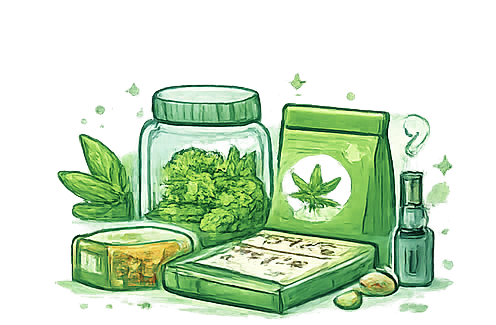
TYPES OF MARIJUANA PRODUCTS
FLOWER BUDS
Commonly referred to as “buds,” the flowers of the cannabis plant are the most potent for medicinal properties. The leaves of the cannabis plant also contain some cannabinoids, but in much lower concentration. The flowers and leaves of the plant can be smoked, vaporized, or used to prepare edibles.
CONCENTRATES
Concentrates are manufactured by separating the trichomes from the marijuana flowers to create a concentrated dose of this specific part of the cannabis plant (refer to the section on Cannabinoids, THC, and CBD above for a description of trichomes). The trichomes are then processed into a relatively solid paste or block. Concentrates can be somewhat powdery or more solid and sticky, depending on exactly how they were processed.
KIEF
Kief is also made from the trichome part of the marijuana flower. Kief is simply the dried trichomes, without any further processing. It comes as a dry powder and can be smoked or vaporized or used to make edibles. It is sometimes sprinkled on the top of marijuana before smoking or vaporizing to augment the trichome content in the flowers. Some grinders used to evenly cut up the marijuana flowers before vaporizing or smoking have a small-mesh screen at the bottom for collecting kief over time.
METHODS OF CONSUMPTION
Medical marijuana can be ingested in many ways. Effects may vary slightly with different methods of consumption. The length of time it takes for the medicine to take effect, and the length of time the medicine remains effective, can vary greatly with different methods of consumption.
SMOKING MARIJUANA
Marijuana can be smoked via pipes, water bongs, or in rolling paper like a cigarette (joints). According to Americans for Safe Access (www.safeaccessnow.org), smoking marijuana produces the most immediate relief and permits the most refined control of dosage. While patients gain medical benefit and good for the lungs, the amount of marijuana needed to smoke is so small that patients should not be overly concerned. Furthermore, using water pipes or other means of filtration will reduce the amount of unwanted plant material inhaled. It is better to use the flowers rather than the leaves as this also reduces the amount a patient needs to smoke. Whenever possible, it is recommended to use vaporizers or edible forms of medicine to avoid a negative impact on pulmonary health.
VAPORIZING MARIJUANA
According to Americans for Safe Access (www.safeaccessnow.org), marijuana vaporizers are designed to let users inhale active cannabinoids while avoiding smoke. Vaporizers work by heating the marijuana to a temperature just below the point of combustion, the point at which smoke is produced. When the marijuana is properly heated, THC and other cannabinoids are emitted in the form of a vapor. Many patients who find smoked marijuana highly irritating report effective relief inhaling through vaporizers. Also, vaporizers are high in efficiency, decreasing the amount of medicine consumed and ultimately saving money long term. If you are used to smoking your medicine, you may think that you aren’t “getting anything” at first when you vaporize, because vapor does not burn the throat. Even though the vapor doesn’t burn, it is still quite effective. Use caution and wait a few minutes to feel the full effects before taking more.
INGESTING MARIJUANA
Marijuana can be eaten, although usually in the form of baked goods like cookies or in candy-like products since THC and other cannabinoids are more efficiently absorbed into the bloodstream when combined with butter and other lipids. The time to onset of effects depends strongly on stomach content, but is usually 1 to 2 hours, and may continue for a considerable length of time, whereas the effects of smoking marijuana are almost immediate, lasting a shorter length of time. It may also take longer for you to learn what dose is appropriate for you when eating the edible effects will go stronger than dose felt by smoking. You cannot overdose on marijuana; however, side effects can be intense and overwhelming. Use caution when trying edible products especially if you did not make them. Try small doses at first and give yourself a few days to figure out the amount needed.
The most common forms of edibles are:
• Treats such as cookies, brownies, cakes, or candies. Any food that contains butter or oil can be made with marijuana-infused butter or oil.
• Oils and honey to be used directly in foods or teas
• Capsules often containing oils
• Beverages
• Tincture is a process of using alcohol to extract cannabinoids from the plant into a liquid form. Tincture preparations have a similar effect as eating marijuana but the onset happens more rapidly and wears off more quickly. Tinctures can be taken under the tongue or mixed into water or other beverages.
• Tea like other herbs, marijuana may be made into a tea. Boil water and pour it over the marijuana. Allowing the marijuana to steep for approximately an hour and a half will ensure extraction of the cannabinoids. The effects are very like eating it.
APPLYING MARIJUANA TOPICALLY
Marijuana can be absorbed through the skin making it ideal for topical ointments, lotions, salves, creams, oils, and compresses. These products are most effective for localized pain relief. Topicals are meant to be used through topical application only, and should not be applied to open wounds or cuts. Many topicals will include other herbs such as arnica or Saint John’s Wart to help aid in absorption and to enhance healing properties of the topical. Compress can be made by following the same instructions for tea. Make as much as you need to thoroughly soak the cloth you intend to use. Apply to pain and leave on for 1/2 hour.
POSSIBLE SIDE EFFECTS INCLUDE:
• Anxiety
• Coughing/respiratory problems
• Dry mouth
• Euphoria
• Hallucinations
• Impaired coordination and driving ability
• Rapid heart rate
• Red eyes
• Sedation
• Short term memory loss
DRUG INTERACTIONS:
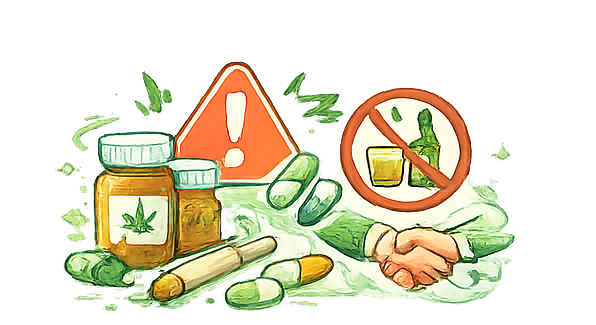
Just like other medications, marijuana has the potential to interact with other medications, supplements, and recreational drugs like alcohol. There are three types of drug interactions that can occur:
Antagonistic reaction: 1+1=0.
In this case, two substances cancel each other out, reducing the effectiveness of both drugs.
Additive reaction: 1+1=2.
In this case, two substances each provide their own reaction, resulting in users experiencing the full effects of both.
Synergistic reaction: 1+1=4.
In this case, the substances react together to produce an effect stronger than with either one alone.
It is important to know how the medications, supplements, and recreational drugs interact to ensure that your medications retain their effectiveness, and that over-intoxication does not occur. Therefore, it is important to tell those who prescribe medications or supplements to you that you are using medical marijuana. Additionally, care should be taken when combining marijuana with other substances until you know how marijuana will affect you.
Should you, or a friend, or family member become aware or concerned that you are experiencing side effects associated with your medical marijuana use, you are encouraged to notify your dispensary so that we can help. You may also feel it beneficial to alert your certifying or other physician that you may be experiencing side effects.
COMMON SIGNS AND SYMPTOMS OF DRUG ABUSE:
• You are neglecting your responsibilities at school, work, or home (e.g. flunking classes, skipping work, neglecting your children) because of your drug use.
• You are using drugs under dangerous conditions or taking risks while high, such as driving while on drugs, using dirty needles, or having unprotected sex.
• Your drug use is getting you into legal trouble, such as arrests for disorderly conduct, driving under the influence, or stealing to support a drug habit.
• Your drug use is causing problems in your relationships, such as fights with your partner or family members, an unhappy boss, or the loss of old friends.
COMMON SIGNS AND SYMPTOMS OF DRUG ADDICTION:
• You have built up a drug tolerance. You need to use more of the drug to experience the same effects you used to get with smaller amounts.
• You take drugs to avoid or relieve withdrawal symptoms. If you go too long without drugs, you experience symptoms such as nausea, restlessness, insomnia, depression, sweating, shaking, and anxiety.
• You have lost control over your drug use. You often do drugs or use more than you planned, even though you told yourself you wouldn’t. You may want to stop using, but you feel powerless.
• Your life revolves around drug use. You spend a lot of time using and thinking about drugs, figuring out how to get them, and recovering from the drug’s effects.
• You have abandoned activities you used to enjoy, such as hobbies, sports, and socializing, because of your drug use.
• You continue to use drugs, despite knowing it’s hurting you. It’s causing major problems in your life—blackouts, infections, mood swings, depression, paranoia—but you use anyway.
Should you become aware or concerned that you are experiencing side effects associated with your medical marijuana use you are encouraged to notify your dispensary so that we can help. You may also feel it beneficial to alert your certifying or other physician that you may be experiencing side effects.
SUBSTANCE ABUSE AND REFERRAL PROGRAMS:
• Advanced Counseling Center in Tempe: (480)-685-9550
• Banner Behavioral Health Hospital in Scottsdale: (480)-941-7500
• St. Luke’s Behavioral Health Center in Phoenix: (602)-251-8535
• Family Service Center in Phoenix: (602)-264-9891
ALTERNATIVE MEDICAL OPTIONS FOR HEALTH AND WELLNESS:
• Acupuncture
• Chiropractic
• Homeopathy
• Hypnotherapy
• Massage
• Naturopathy
• Nutrition Classes
• Natural Herbal Medicines such as herbal tea, oils, herbs, and salves
• Pharmaceutical Medications
• Psychological Counseling
• Yoga
PATIENT SYMPTOM TRACKER:
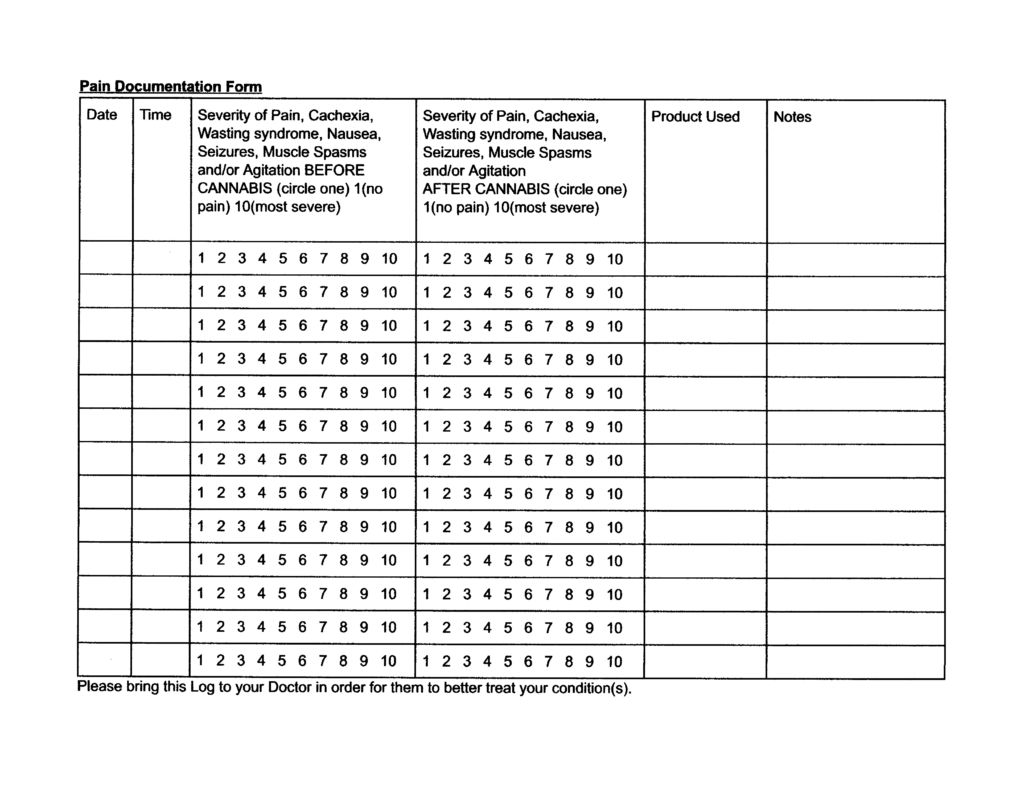
To help assist patients with self-assessment and the ability to describe the effects of marijuana to their doctor, this dispensary recommends patients utilize a “Patient Symptom Tracker” to log critical information about medicine and its effects, particularly relating to pain, appetite stimulation, nausea, seizures, muscle spasms, or agitation. The information that follows will instruct you on how to use the patient symptom tracker effectively.
When assessing the effects of a particular strain or preparation, try to consume the medicine for the first time when you have not used any other marijuana products so you can get the best idea of how it makes you feel. Bring your patient symptom tracker sheet(s) to your next appointment with your Health Care Provider. Talking with your Health Care Provider will help determine the effectiveness of your medication.
PATIENT HEALTH LOG EXAMPLE:
Date & Time: 8/10/17 at 9:00 P.M.
Strain of Medicine:
Dosage/Amount Used:
Method of Use: ACDC – HYBRID
2 Inhalations
Vaporizer
My Symptoms: Pain Associated with Migraines
Symptoms Before Use Scale 1 through 10
Length of Symptom Control & Effectiveness Agitation
Appetite Stimulation
Muscle Spasms
Nausea
Pain 8 4 Adequate Pain Relief for 2 Hours
Seizures
Other
Other
Other
Other
Unwanted Side Effects: I felt a little hungry after 30 minutes of dosing 2 inhalations.
Notes for Doctor: After 15 minutes of dosing 2 inhalations I felt relaxed and my pain from my migraine was decreased. I felt very comfortable and could fall asleep.
Symptoms After Use Scale 1 through 10
PATIENT SYMPTOM TRACKER:
Date & Time:
Strain of Medicine:
Dosage/Amount Used:
Method of Use:
My Symptoms:
Symptoms Before Use Scale 1 through 10
Symptoms After Use Scale 1 through 10
Length of Symptom Control & Effectiveness Agitation
Appetite Stimulation
Muscle Spasms
Nausea
Pain
Seizures
Other
Other
Other
Other
Unwanted Side Effects:
Notes for Doctor:
If needed, make a copy of this page to track your symptoms on an ongoing basis.